
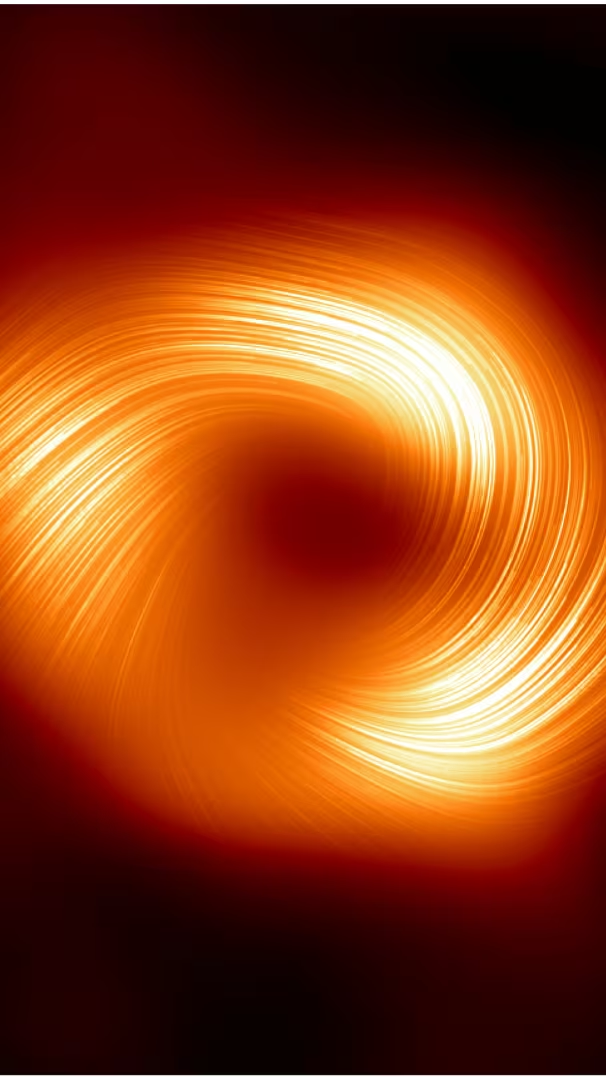
Capturing footage of a black hole in motion is a monumental challenge due to their immense gravitational pull and distance from Earth. The process begins with advanced telescopes, such as the Event Horizon Telescope (EHT), which combines data from multiple radio observatories around the world. This “virtual Earth-sized” array allows astronomers to observe the shadow of a black hole against its glowing accretion disk.
To capture dynamic footage, scientists rely on high-resolution imaging and advanced algorithms to stitch together data. By observing how matter interacts and spirals into the black hole, they can create simulations and visual representations. Timing is crucial, as black holes can change rapidly. Observing the surrounding stars and gas gives insight into the black hole’s movement and effects on its environment.
Additionally, data from gravitational wave detectors like LIGO can provide information on mergers, offering a comprehensive view of black hole dynamics. Despite technological limitations, ongoing advancements bring us closer to visualizing these cosmic phenomena.
For more details and the full reference, visit the source link below: