
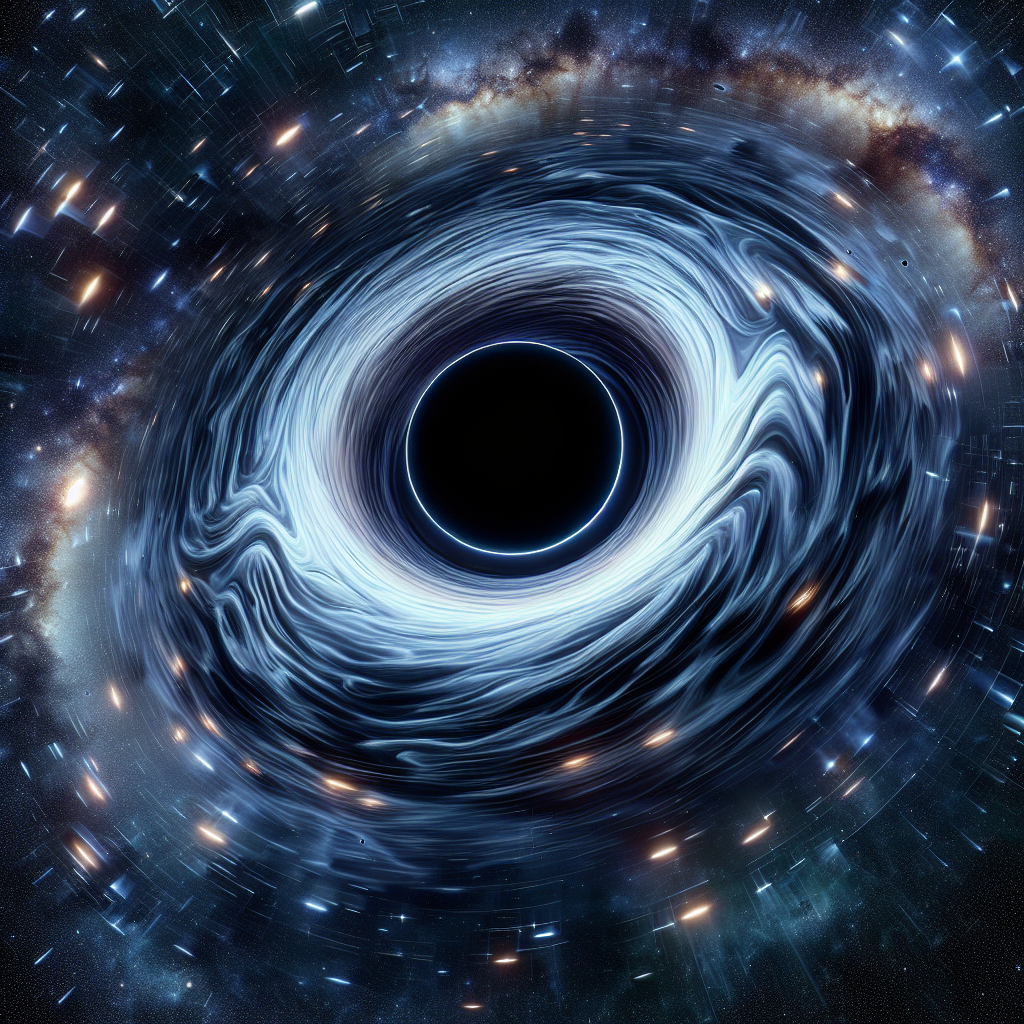
Capturing footage of a black hole in motion is a daunting yet fascinating challenge. Given that black holes are invisible, the key lies in observing their effects on surrounding matter. Scientists use powerful telescopes equipped with advanced imaging techniques, such as the Event Horizon Telescope (EHT). This network of radio telescopes works together globally to capture high-resolution images of the material spiraling into a black hole, known as accretion disks.
To effectively capture footage, researchers analyze the electromagnetic radiation emitted by this matter as it accelerates and heats up. By studying the movement of stars orbiting a black hole, astronomers can infer its gravitational influence and motion. Additionally, advancements in simulation and computer algorithms help visualize the dynamics of black holes based on observed data.
Despite the challenges, ongoing technological advancements promise to enhance our ability to capture and interpret the elusive behaviors of these cosmic giants, offering insights into their mysteries and the fabric of the universe itself.
For more details and the full reference, visit the source link below: