
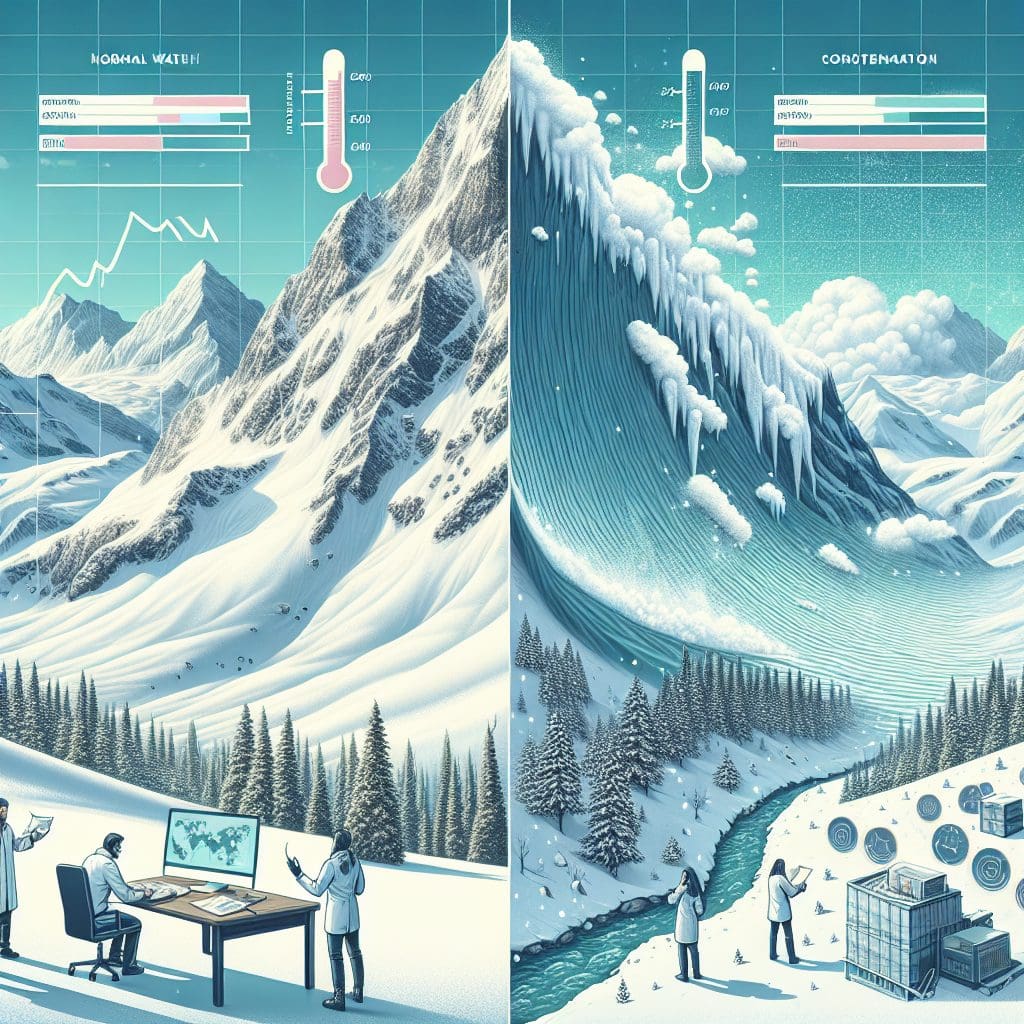
Climate change significantly impacts avalanches and their predictability. Warmer temperatures lead to increased melting of snow and altered precipitation patterns, resulting in complex layering of snowpack. This instability heightens the risk of avalanches. The frequency of heavy snowfall events may also increase, followed by rapid warming, creating conditions ripe for avalanches.
Predicting avalanches is becoming more challenging due to these changing conditions. Traditional forecasting methods rely on historical weather patterns and snowpack stability, but climate change disrupts this data. As weather becomes more unpredictable, avalanche forecasters face a steeper learning curve to understand new patterns.
Moreover, increased tourism in mountainous regions due to milder winters can lead to human-triggered avalanches, further complicating predictions. Scientists and researchers are now using advanced technologies, including weather models and satellite imagery, to improve forecasting. However, adapting to the ongoing changes remains crucial for ensuring safety in avalanche-prone areas as climate conditions continue to evolve.
For more details and the full reference, visit the source link below: